Wednesday, September 30, 2009

Dollo's Law

There's a new piece out about Dollo's Law* in Nature which I first found out about from the NYT's Science Times yesterday. Louis Dollo was a 19th c. paleontologist who hypothesized that evolution is not reversible (quoting from here):
An organism is unable to return, even partially, to a previous stage already realized in the ranks of its ancestors.
Or as one of the Nature authors, Joseph Thornton, puts it in the Science Times piece, mutations "burn the bridge that evolution just crossed." I think most people today don't see the irreversibility as a law, but a very high probability, and Thornton takes that view.

The scientists tried to undo a set of mutations in a molecule (a glucocorticoid receptor) and found that you couldn't get it back to its earlier evolutionary state. They argue that the complexity of the evolutionary path and interactions among changes shut down the road to reversal.
Dr. Thornton believes it says something important about the course of evolutionary history. Natural selection can achieve many things, but it is hemmed in. Even harmless, random mutations can block its path. “The biology we ended up with was not inevitable,” he said. “It was just one roll of the evolutionary dice.”
This caught my eye because Dollo's Law is a notion that gets talked about, mostly informally, here and there in linguistics. It's part of the ongoing discussion about how linguistic change and biological evolution run parallel, or don't. It's a little coincidence then to find that This Modern World was covering "Language is a virus" at the same time (click to enlarge):

Sigh, some evolution I wish could be reversed.

*That's a Wikipedia entry that needs some editing.

Monday, September 28, 2009

Voicing, with tongue in cheek


There's too much to blog about these days,* so this probably counts as randomness: Over at wonkette, as part of a snarko-screed called "Lo! The Wretched Ancient Saga Of Liz Cheney",we find this description of the voiced sibilant /z/ in English:
According to several popular children’s ghost stories books, centuries ago Dick Cheney created another in the image of himself. He called it “Liz,” for he liked to draw out the zzzz and allow the vibrations produced by the humans’ language tickle his tongue-organ.
Wow, pretty poetic description of vocal fold vibration, there, Wonkette.

*For instance. this piece on standardized testing. Or this remembrance of Safire by John McWhorter.

Sunday, September 27, 2009

WIlliam Safire, RIP

I was sorry to learn just now of the death of William Safire. This blog was in no small part inspired by a frustration with his On Language columns. Our relationship was a rocky one (as is clear here), but his last columns were often the best of his language stuff.

Saturday, September 26, 2009

Don't let this happen to you: Windows 7

You probably know about the pending launch of Windows 7, and the campaign by Microsoft to get people to have 'launch parties'. And you may know about this video:


The reaction around the web has been pretty snarky (I like this example). When I talked to the missus about this, she said we should host one with only non-Windows machines. And Open Office has gotten very good if you want to abandon Microsoft.

But really: Is Microsoft aiming to become to Glen Beck of industry or what?

Thursday, September 24, 2009

Pennsylvania Dutch news


Nice: A new textbook for Pennsylvania German. It's $25.00, plus $4.00 shipping, from Masthof Press, 219 Mill Road, Morgantown, PA 19543-9516.

Wednesday, September 23, 2009

New journal: Rejecta Mathematica

There's a new journal out there, Rejecta Mathematica, here. From the FAQ:
What is Rejecta Mathematica?
Rejecta Mathematica is an open access online journal that publishes only papers that have been rejected from peer-reviewed journals in the mathematical sciences.

Is this some kind of joke?
No, Rejecta Mathematica is real.

But weren't those papers rejected for a reason?
Quite probably, yes.

So why publish them?
We believe that many previously rejected papers (even those rejected for legitimate reasons) can nonetheless have legitimate value to the academic community. This value may take many forms:
  • "mapping the blind alleys of science": papers containing negative results can warn others against futile directions;
  • "reinventing the wheel": papers accidentally rederiving a known result may contain new insight or ideas;
  • "squaring the circle": papers discovered to contain a serious technical flaw may nevertheless contain information or ideas of interest;
  • "applications of cold fusion": papers based on a controversial premise may contain ideas applicable in more traditional settings;
  • "misunderstood genius": other papers may simply have no natural home among existing journals.

Many authors of a rejected paper may simply have disagreed with or chosen to not address the original reviewers' concerns. Rejecta Mathematica also gives those authors the chance to speak out in defense of their own paper.

Is anybody else slightly unnerved at the thought of being rejected by this journal?

Tuesday, September 22, 2009

Terps

The NYT has an editorial today about the vital role and sometimes crappy treatment that many interpreters in the military get, "Maladies of Interpreters" by Joshua Foust. The subject line comes not from any connection to the University of Maryland Terrapins (aka the Terps), but from the cropping of the word in military usage. Kind of nice example, where you delete material before and after the stressed syllable.

I can't speak to the details presented, but it sounds too plausible. Of course it comes at a time when language programs and language study in general are under attack, especially the study of 'obscure' languages (see here for local examples).

Image from here.

Monday, September 21, 2009

Aha ... what linguists do in their free time

In Madison, Wisconsin, they apparently play shuffleboard. Check out this story. (For more photos of Woody & Anne's, see here.)

I wonder if the Bilabial Fricatives have any openings on the team.

Offical language in the news

Apologies if you've seen this one already, but it popped up in an ad in one of our student newspapers (The Daily Cardinal, and, yes, we have two), I kinda liked it.

Sunday, September 20, 2009

Unreconstructed beatniks, and un-

Deborah Solomon's "Questions for [famous name here]" piece in the NYT Sunday Magazine is something I always look forward to: It's normally a tasty little nugget of who knows what.

But today, I was already plenty happy to open the Magazine and see that Ben Zimmer is doing "On Language" this week. And it's on language, too: About the winding path of the prefix un- in English, with ample quotes from Lawrence Horn. Zimmer closes with this line: "Like it or un-." There's a set of degrammaticalizing prefixes in English these days, that is, formerly securely attached word-parts that are coming unglued. (See here for background.) Nice column.


Back to Solomon: Like everybody else, she's interviewing Deborah Tannen, about Tannen's new book on sisterhood. Tannen got established as a noted discourse analysis specialist and then went on to become an author of big time popular books, starting from discoursey stuff and moving out from there. I've long wondered whether she still thinks of herself primarily as a linguist, in fact, given how little most of her work really deals with language these days. We get the answer:
Do you live grandly?
No. I still live like an academic. I don’t wear makeup. I probably still dress like an unreconstructed beatnik. I think of myself as a writer as much as I think of myself as a linguist and an academic. I really enjoy writing — playing with language and getting just the right metaphor.
My guess is that if you're really a linguist and academic, you're all but automatically doomed to not being a fashion plate. (I personally wear a lot of makeup, but that's another matter.) Still, the interview really gives the impression of somebody who's probably more a writer these days. I'm glad she's kept to our sartorial code.

It's interesting how many linguists have made the transition to writing, in a whole range of ways. Steven Pinker has become a superstar writer, but staying with the science thing, and like Tannen keeping an academic position. Rosina Lippi, a formidable sociolinguist, has turned into a really cool fiction writer. Suzette Haden Elgin likewise is a linguist turned fiction writer.

By the way, one note: There was a little dust-up over at the Log about Joe Wilson's "you lie!", where it quickly was established that this is simply idiomatic Southern English. Tannen rounds out the interview nicely but overreaches on the interpretation, I think:
As a linguist, what can you tell us about [Wilson's] statement “You lie”?
It’s a way to be maximally agonistic and get the most attention with the fewest words. It’s the kind of thing some sisters might yell at each other, especially when they’re teenagers.

Friday, September 18, 2009

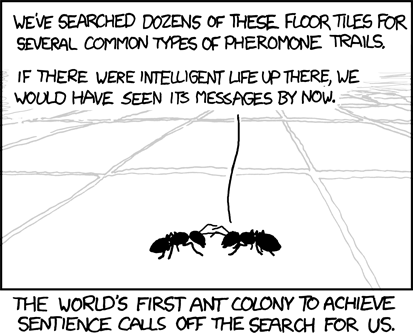
xkcd rules our universe

… and probably others (see here).


Check out the link for the rollover.

Where syntacticians go on vacation ...

The things you find when you Google in preparing for class ...

http://www.xbarranch.com/

Looks like a great venue for a workshop.

Thursday, September 17, 2009

Idioms and not


This Onion headline made me LOL just now so I thought I'd post it...  Do non-linguists find these funny?  If so, could they explain why it's funny?  Good empirical question, I suppose...

Wednesday, September 16, 2009

"Call of duty: Modern linguistics"

Wow, I hadn't seen this one until yesterday. From the name, I was figuring it might be a game for linguists in the usual military sense, but not quite. If you check out the blurb here, it's pretty much all over the map. They say:
Over a dozen word games offer hours of challenge as you square off against hilarious multi-ethnic computer opponents like Omar al-Wordsadi, Mikael Beatyourov, and Capt. "Smarty Pants" Price to find out once and for all who is the smartest word warrior. But that's just the tip of the iceberg. A more in-depth and difficult Veteran mode offers compelling new tasks. Can you decipher the proper nouns of possible terror cell locations in a 512-bit encrypted email? How good are you at translating Farsi to English? With Call of Duty: Modern Linguistics, the war on terror has never been more fun, or educational!
That's odd. But it's not the tip of the iceberg, even:
Are you ready to fight in the greatest battle known to mankind? The war is raging, and only you can help defeat the un-American scourge of double negatives, run-on sentences, improper subject-verb agreement, and violent religious extremists hell-bent on the destruction of the United States and our way of life.
Double negatives are ARCH-American. Hell, Bush uses them. And then:
In Call of Duty: Modern Linguistics, you're enlisted in a verbal boot camp designed to test your semantic knowledge and push your language skills to the breaking point. You won't find out if you could suck a golf ball through a garden hose, but you will learn the etymological root of the word "suck" and a slew of racial epithets thanks to Xbox Live support.
Wait, Xbox Live support teaches a slew of racial slurs?

Friends and countrypeople, I've clearly stumbled across something I cannot comprehend. Help me out here, please: What's going on with this game and/or this ad?

Saturday, September 12, 2009

'to finch'

I was just alerted by a contributor to something from the local paper last week, from Wednesday's Wisconsin State Journal (click to enlarge, of course):

The question is the verb 'to finch'. You have to wonder if this isn't a blend of 'to pinch' in the sense of minor thefts and 'to filch'. Indeed, the Dictionary of American Regional English proposes that for the one attestation of it that they have — from California. Of course, it's possible that westward movement got a local Wisconsin term to the west coast.

Tuesday, September 08, 2009

Leet speak in health sciences?

Was talking to some folks over the weekend, one who works in health care for a state agency. (And the subject cannot be touched on without noting that Wisconsin seems to have the highest quality of care of any state in the US, as laid out here.)


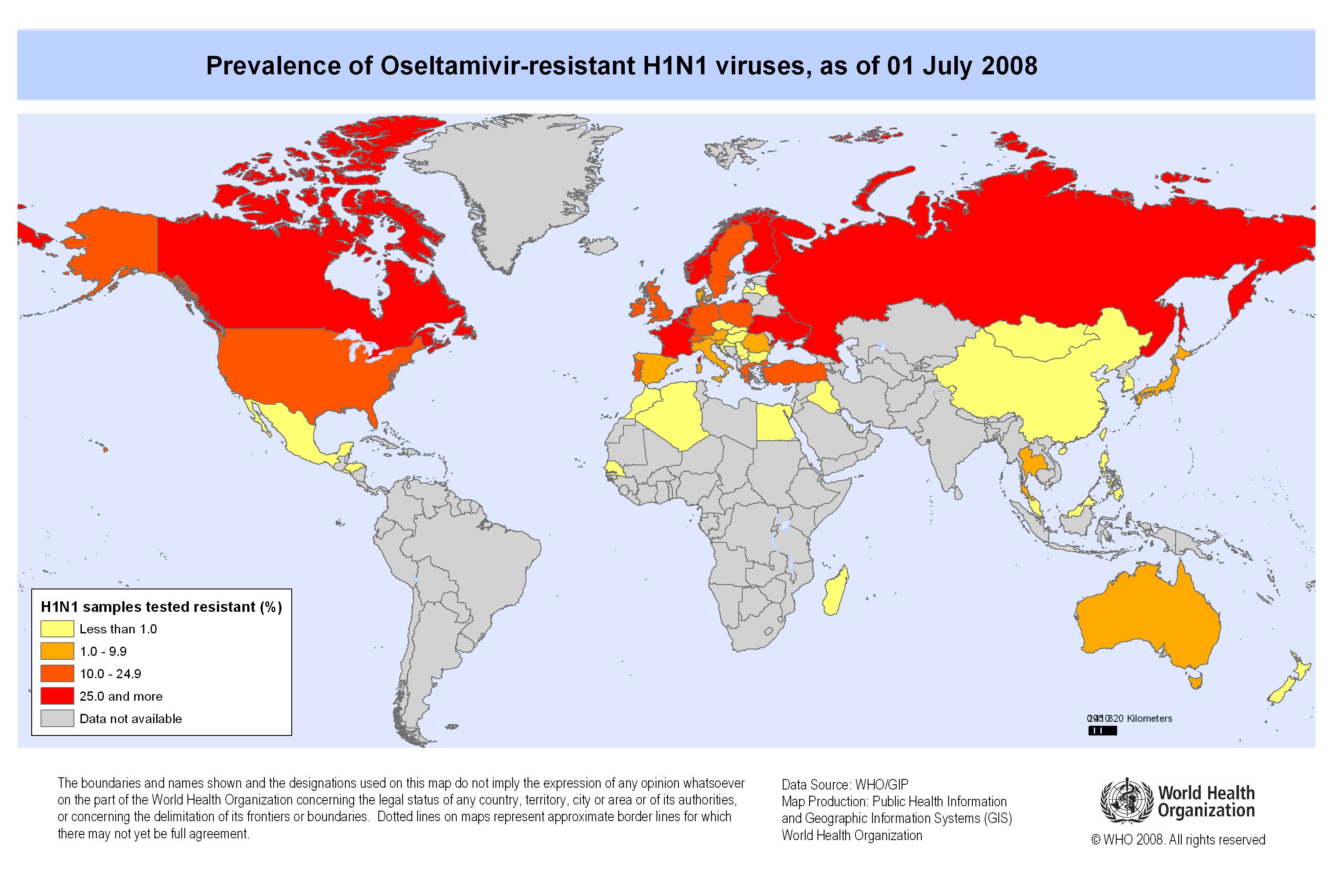
I've recently used the term 'Swine flu' casually and been corrected to 'H1N1', but those four syllables don't quite bounce off my tongue yet. (The Dutch are apparently calling it the 'new flu', which would work better.) In this conversation, though, the topic came up and the health care worker said more or less this: "Oh yeah, we've decided that H1N1 will be pronounced 'Heinie'." Hey, that's gotta be leet speak, right?

Map from here.

Sunday, September 06, 2009

Theory and evidence

Here's a quote (slightly modified) that could be uttered about many fields and even lobbed across partisan lines within some fields:
As I see it, the profession went astray because we, as a group, mistook beauty, clad in impressive-looking mathematics, for truth.
What's the profession? It's economics, and this is from Paul Krugman's NYT Sunday Magazine piece this morning, here, "How Did Economists Get It So Wrong?".

Happily, I don't seem to hear this much in linguistics these days. No doubt a matter of who you hang out with, but it seems like everybody I deal with seriously agrees on the need for working hard with good data.

Saturday, September 05, 2009

Rob Brackenridge, the t-shirt

Well, didn't make it to the Rob Brackenridge show as planned last night — turned out to be a bumpy week in Verbville, but at least one contributor did and said it was great. They alerted me, in fact, to the t-shirts he's selling (here):


I'm never really comfortable with any of the word plays on Ebonics, but I suppose the name of our state calls out for it.

Friday, September 04, 2009

People INSIST on English

... or so it seems in this video.

Thursday, September 03, 2009

US English ... "The battle for our way of life in America"

An occasional reader of this little blog just passed on a 'survey' he'd gotten from US English, one of the major English Only groups. Survey needs scare quotes here because it's precisely the kind of push-poll approach you would expect from these folks. Questions start off pretty innocent, with the first just being whether you've "noticed an increased use of foreign language in your community over the past few years". But we soon get to the meat of the matter:

I wonder how many Americans actually are "made to adapt" to foreign languages in any way more significant than pressing 1 for English.

And of course this isn't about new arrivals or anything, it's about people who refuse to learn English:
I know a lot of immigrants and I'm pretty sure I've never met one who refused to learn English.

Finally, with the plea for money, we get just how big the stakes are in this:

What can you say to that?!?!?

Wednesday, September 02, 2009

O.M.G.: Rob Brackenridge in Madison!!!!


My heart is palpitating or however the heck you spell it. Just learned that Rob Brackenridge is IN MADISON, WI for the next few days. Can't miss this one!!!!

Rob did a brilliant podcast for the Wisconsin Englishes Project and has a ton of fans in the area. Here's the 411 on the gig.